Socks for volley-ball








Up to five sets, dozens of jumps, just as many receptions: in a long match, volleyball socks take more than you think. A good pair keeps your foot in the shoe, limits blisters, and keeps your ankle dry until the last point.
The page covers low, mid-high, and high models, for everyone.
Low, mid or high: follow the height of your shoe
The height of the sock should be chosen to match the shoe. A low sock goes with a low-top shoe and keeps the ankle free. A mid-height sock protects the back of the ankle from the friction of a mid-top shoe. A high sock rises to the calf and is often worn during matches, in the club colours.
Cotton or technical fibre: the issue of sweat
Cotton is soft, but it retains moisture and can lead to blisters. Technical socks made from polyester or polyamide wick away sweat better and dry faster. Many sports models combine both, with reinforced areas at the heel and toe.
The details that make a good indoor sock
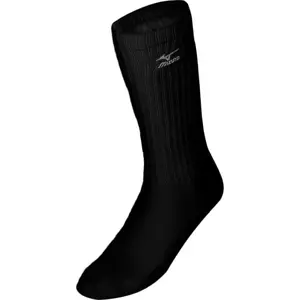
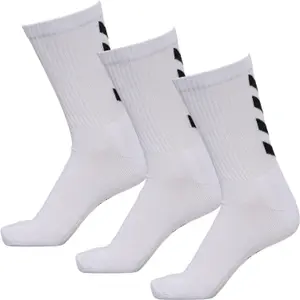
A cushioned area under the sole absorbs landings. An elastic support around the arch prevents the sock from slipping inside the shoe. Anatomical models, with a left and right foot, fit the shape of the foot better. Mizuno indoor volleyball socks or the Blaze Pro from Hummel at the top of the page play on these features.
Thinned heel, tired elastic: when to change your pair
Wash them inside out, at a moderate temperature, to preserve the fibres and the cushioning. The tumble dryer wears them out quickly and makes them lose their elasticity. Replace them when the heel starts to thin out: a worn sock slides and encourages blisters.
Errea, Hummel, Mizuno: the brands of match pairs
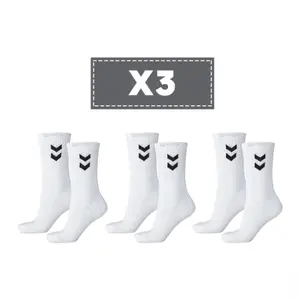
Errea offers its socks in the colours of its team kits. Hummel focuses on its Blaze Pro training socks, its lower Pro Low socks, and its Basic packs of three pairs. Mizuno provides volleyball socks, high models, and training packs. Kempa offers its Logo Classic, while Joma and Puma complete the range with their team pairs.
Matching socks with the rest of the outfit
Socks go well with shorts on the bottom and shirts on the top, ideally in the same colour. For warm-ups, trousers and sweats take over. Jackets and tracksuits are used for travel, t-shirts and polos for sessions, and baselayers are worn under the outfit.
Renewing team pairs for less
Lots and discounted pairs can be found in the special textile offers and in the textile clearance. The Black Friday textile allows renewing the pairs for the whole team before Christmas.
Frequently asked questions
Do you need special socks to play volleyball?
It's not mandatory, but a cushioned sports sock offers better protection than a regular sock. It absorbs landings and limits blisters. For a regular player, the difference is noticeable quickly.
Should socks be the same colour in the team?
In competitions, the outfit must be uniform, including socks, according to regulations. Many clubs choose a solid colour, white or black, which is easy to renew. Check your league's rules before ordering.
How can I avoid blisters in volleyball?
A sock in the right size, without folds, is the first remedy. Avoid pure cotton, which holds moisture, and choose a reinforced sock at the heel. Well-fitted shoes do the rest.
What sock size to choose between two sizes?
Take the size that corresponds to your sports shoe size. If you're on the borderline, the smaller one fits the foot better, while the larger one might create folds. Highly elastic socks offer more room.
Do compression socks have benefits in volleyball?
They support the calves and can help with recovery after a match or tournament. Some players wear them during the game for support. They remain a comfort choice, not a requirement.